
Symptoms of excessively frightened cats
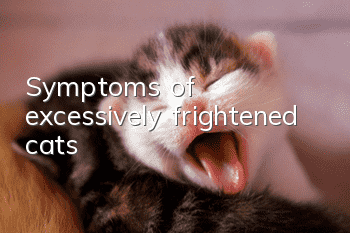
In fact, most cats are relatively timid. They are always startled and can be easily frightened. When a cat feels scared, it will have the following 10 behaviors. Don’t be ignorant and don’t ignore it!
1. Walking with a straight back
When cats are frightened or perceive any danger, their backs will become abnormally tight, their tails will shake unnaturally, and their heads will probe into their brains, making them very alert.
2. Lying on your side and shaking your tail
Dogs wagging their tails are friendly, but for cats, wagging their tails is a very clear warning signal. If the cat is lying on its side and shaking its tail, it means that something is making the cat upset and nervous.
3. Fried hair
When a cat feels scared or nervous, his hair will explode. This is a physiological reaction of cats. When the brain makes a decision, the cat judges that there is danger nearby, so this is a warning!
4. Pupil dilation
When cats are frightened and feel fear, their pupils will also become larger. This is because the cat is scared and changes in order to better observe the surrounding environment.
5. Stare at things
For cats, staring at each other is a provocative behavior. When a cat stares at something, although it may look very calm on the surface, it is actually ready to fight back if there is a chance to escape.
6. Hide
When a cat feels scared, he or she will hide. For cats, hiding in cardboard boxes and small spaces feels safe and fun. On a psychological level, cats believe that small spaces give them a safe place to hide from their troubles.
7. Aggression
If a cat is usually very gentle and friendly to people, but suddenly changes its temperament and scratches and bites its own kind or owner, such abnormal behavior is mostly due to psychological abnormalities.
8. Cringe
If cats cannot face fear by hiding or attacking, they will curl up and face their surroundings with a hesitant expression. Moreover, cats will also show a weak look to achieve the purpose of reducing the other party's malice.
9. Frequent licking
When a cat licks its fur frequently and does not suffer from skin diseases, it means that the cat feels nervous, scared, or anxious, and uses licking to relieve stress. Excessive licking of cats' fur can easily cause damage to the skin and cause infection. Don't ignore it.
Cats usually lick their fur to clean their bodies, so it is recommended to feed the cat some hair removal cream regularly to expel hair balls, which can prevent hair ball disease.
10. Decreased appetite
If a cat is not sick, but suddenly has a loss of appetite and is not interested in food, it is likely to be caused by abnormal mood. In addition, the feces scraper can also observe whether the cat has constipation, diarrhea, hair balls, abnormal stools, etc.
Cats’ gastrointestinal tracts are relatively fragile and prone to indigestion, so it is recommended that the poop scooper choose an easy-to-digest cat food for the cat.
Related articles
Random articles
- The last bit of cat poop is bloody
- Will the wound of a cat heal very slowly after being sterilized? Some common sense about cat sterilization!
- What should I do if my cat steals food? What’s the solution for cats stealing food?
- What changes occur in cats during their first love period?
- How about choosing to raise a British Shorthair cat?
- Are folded cat ears natural?
- How to take care of Chinchilla cat hair?
- Tips for training two cats to get along, so the cats can get along quickly and harmoniously!
- Why do cats get under the covers?
- Is your cat’s hair loss still serious in autumn? Maybe you have ignored these diseases?