
What harm does secondhand smoke do to pets? Know how to prevent pets from being exposed to second-hand smoke
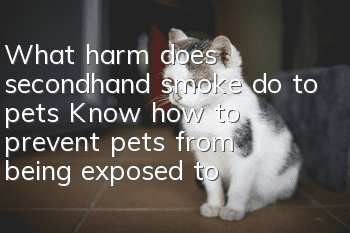
The harm caused by second-hand smoke to the human body is common knowledge among women and children. Similarly, for pets, secondhand smoke can also pose a threat to their lives. As an owner, it is extremely important to understand the dangers of second-hand smoke to your pets and know how to prevent your pets from being exposed to second-hand smoke.
What is second-hand smoke?
Secondhand smoke is the common name for passive smoking, which is the behavior of non-smokers inhaling the smoke exhaled by other smokers. It is also called "forced smoking" or "indirect smoking". Generally speaking, when passive smoking lasts for more than 15 minutes, the phenomenon of second-hand smoke can be considered established.
Secondhand smoke actually consists of two kinds of smoke, one is the smoke exhaled by smokers, called mainstream smoke; the other is the smoke produced when cigarettes are burned, called side stream smoke. No matter what kind of smoke inhaled by non-smokers, it is considered second-hand smoke. Most people cannot completely avoid contact with cigarette smoke, so second-hand smoke is very common.
Studies have pointed out that secondhand smoke contains more than 4,000 harmful chemicals such as tar, ammonia, nicotine, suspended particles, PM2.5, polonium-210, and dozens of carcinogens.
What are the dangers of second-hand smoke to pets?
1. Secondhand smoke can cause respiratory diseases in dogs. Long-term inhalation can cause allergies in dogs, and in severe cases, they can develop nasal cancer and lung cancer.
2. Dogs who live in smoking households for a long time will have a 60% increased risk of lung cancer. If you have a short-nosed dog at home, the chance of getting sick is even higher, about twice as high as a long-nosed dog.
3. Contrary to lung cancer, long-nosed dogs are more likely to suffer from nasal cancer than short-nosed dogs.
4. Cats who inhale secondhand smoke for a long time are prone to lymphoma and oral cancer. Also, the chance of developing squamous cell carcinoma is higher in the oral area.
5. Cats are more susceptible to the harm of second-hand smoke than dogs. Not only do they inhale the smell of second-hand smoke in the air, but they also have the habit of licking their fur, which allows them to directly lick the tobacco carcinogens accumulated on their fur into their mouths. Inside. Double hazards make cats susceptible to lymphoma.
6. The respiratory systems of birds are very sensitive to any pollutants in the air. Therefore, they are more likely to suffer from eye diseases, skin diseases and lung diseases when exposed to second-hand smoke.
If a pet swallows tobacco, it will cause poisoning and symptoms such as nausea, vomiting, drooling, diarrhea, convulsions, abnormal pulse, and rapid heartbeat. In severe cases, it may cause difficulty breathing or even death.
Therefore, pet owners who have smoking habits are asked to place cigarettes properly and clean ashtrays frequently to prevent pets from accidentally ingesting tobacco orSoot. In addition, exercise is a magic weapon for health. Taking pets outdoors to do some exercise can not only enhance the relationship with pets, but also improve their immunity.
Related articles

Random articles
- What should I do if my cat accidentally smells Fengyoujing? What's the harm?
- How to prevent cat ringworm in your daily life?
- Will a cat die if he eats potato chips?
- What causes vomiting in cats after vaccination?
- Are red tabby exotic shorthair cats easy to raise?
- What age is the best age to neuter a Chartreuse cat?
- How to Trim North American Shorthair Cat Nails
- What is the best way to bathe a cat?
- Precautions for diagnosis and treatment of cats suffering from fungal diseases, a must-read for novices!
- How do you get a timid cat to adapt to a cat carrier or air box?