

When do puppies change teeth? What should you pay attention to when puppies change teeth?
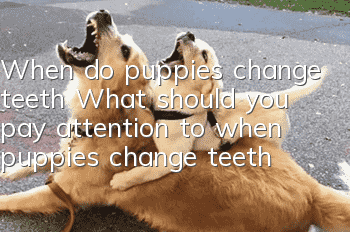
When do puppies get their teeth:
Around 20 days: teeth begin to grow
4 to 6 weeks old: the deciduous incisors are all in length
Nearly 2 months old: all deciduous teeth are fully grown, white, thin and pointed
2 to 4 months old: replace the first deciduous incisor
5 to 6 months old: Replace the second and third deciduous incisors and deciduous canines
After 8 months of age: All permanent teeth are replaced, but it is not ruled out that some dogs will be later, and there are even cases where the replacement is completed after the age of 2 years old
1 year old: The dog’s permanent teeth are all long, white and bright
When changing teeth, due to structural problems in the head bones of some dogs, the deciduous teeth and permanent teeth of some dogs are not in line. In this case, the permanent teeth cannot push the deciduous teeth out, but grow on the inside of the deciduous teeth. This way the deciduous teeth will remain in the mouth, forming a double row of teeth.
The remaining deciduous teeth will affect the normal development of permanent teeth and lead to permanent tooth deformity and malocclusion;
Double rows of teeth are prone to dirt accumulation! Food residues are easily left between the two juxtaposed teeth, which over time can lead to dental calculus and bad breath
Solution:
Feed your dog dry dog food from two months onwards and avoid eating soft food. Be sure to ensure your dog’s calcium intake during the teething period. In addition, if the dog eats animal liver or meat as its main food for a long time, it should supplement calcium in an appropriate amount.
It is best for owners to pay attention to the changes in their dogs during the period when their teeth are changing, to see if they can change all their teeth normally on their own. If not, they should use human help to help them in time. Give your dog more chewing gum, use strings to play tug-of-war games, and often use your hands to help your dog move its deciduous teeth to loosen them.
Dogs’ deciduous teeth can generally be removed before they are one year old. It is not recommended to extract deciduous teeth for dogs before one year old. A dog’s gums are one piece, so removing one tooth may cause the gums to loosen, which is detrimental to other teeth.
If your dog still maintains a double row of teeth after he is over one year old, you should take him to the hospital to have his deciduous teeth extracted.
Related articles


Random articles
- Why does the dog keep shaking his head and wagging his ears?
- How to prevent the occurrence of skin diseases in Alaskan dogs? Dog skin diseases!
- At what age can a Border Collie be toilet trained? It’s easy to remember these points!
- Can pet rabbits eat lychees?
- If your dog urinates everywhere, is it a medical problem or a behavioral problem?
- In this way, the dog is trained to urinate and defecate at a fixed point, so that it will no longer urinate randomly.
- How often should pets be vaccinated against rabies?
- Symptoms and treatment of ear mites in dogs
- The dog keeps rubbing its head on the ground and humping
- How to treat bad breath in Alaskan dogs? Come and take a look!