
How to take care of your dog when he goes home after surgery
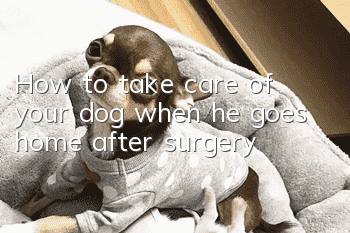
Care methods for dogs returning home after surgery
1. Try to keep the dog quiet and less active: you can keep the dog in a smaller cage or box , or artificially make the nest smaller; take some sedatives when excited and restless; isolate it from other pets, etc.
2. Prevent licking, biting or scratching the wound: you can have someone take care of it; wear a neck ring to prevent the neck from bending; apply protective material to the wound; trim your toenails or wear special leather shoes.
3. Ensure the wound is clean and dry: Generally, you should take a bath before the operation, but no bathing after the operation. Keep the indoor environment dry, and pay more attention to the parts that are easy to soak in urine and feces.
4. Increase nutrition: High-protein, vitamin-rich foods should be fed after surgery to accelerate wound healing. Of course, it is best to follow the instructions of the veterinarian or feed special veterinarian prescription food, because the requirements after surgery for different diseases are not exactly the same
Precautions for dog surgery
1. Check and test in advance, such as blood tests, X-rays, ultrasound and other related diagnoses, so as to understand the dog’s physical condition as early as possible. If you have enough time, you can ask your veterinarian if there is a new vaccine that is more suitable, because sometimes the veterinarian may not pay attention to your dog's condition and medical history. Asking more will do no harm.
2. Discuss your dog’s condition with your veterinarian. If you have any questions and the discharge instructions do not mention writing them clearly, you must ask them. As the surgery approaches, while there is still time, you can sort out your emotions and think about whether there is anything you have missed. Prepare the area in advance to ensure your post-operative dog has a comfortable place at home to recuperate.
3. On the day of surgery, make sure the dog does not eat or drink to prevent the dog from choking on vomit during anesthesia. Generally, the dog needs to stay in the clinic for a period of time, and the veterinarian will do additional tests on the dog, such as blood tests and some preoperative catheter placement.
Related articles

Random articles
- Is it normal for a dog to have a runny nose?
- Can the third dose of dog vaccine be given together with rabies?
- Can dogs eat isatis root if they have a cold and runny nose?
- What are the causes and treatments of fever and vomiting in Pomeranian?
- Will dog nail bleeding heal on its own?
- If your dog has a runny nose, does it mean he has a cold?
- Precautions for newbies in raising puppies
- What should I do if my puppy doesn’t like to eat?
- Why are golden retrievers so thin?
- How to get your dog to say NO to food on the street