
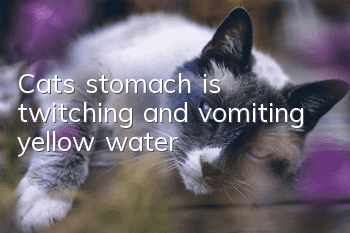
Three tips to help you identify the quality of Chinchilla cats
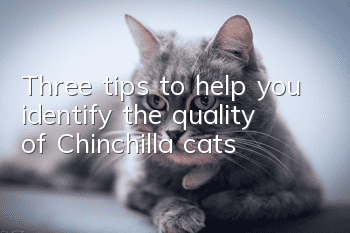
The Chinchilla cat first appeared as an independent breed at the British Crystal Palace Cat Show in 1894. They are the aristocrats among cats. They have a gentle and elegant temperament, are smart and agile, considerate, seldom move and prefer to be quiet, have a high-pitched and soft voice, love to act coquettishly, and behave gracefully. They are naturally pampered and pampered, giving people a gorgeous and noble feeling. . It has always been favored by cat lovers all over the world and is the representative of long-haired cats.
1. Living habits
Chinchilla is noble and elegant yet playful and gentle. Her super clingy personality makes her even more charming. Give your little Kim a name and he will soon remember it and understand your calls. As a child, Jinjila is innocent and naughty. She needs time to exercise and have fun. When she is tired, she will find her owner to act affectionately. After adulthood, the amount of activity gradually decreases, and the time for sleeping and eating is relatively fixed.
Chinchillas with full hair need to be combed and cared for regularly by their owners every day. Spending 5 minutes on grooming your hair every day will also greatly reduce the frequency of hair loss. As one of the long-haired cats, they often need to eat hair removal cream or cat grass and other foods to help their intestines and stomach eliminate hair balls.
Jinjila loves to be clean, recognizes her master, and recognizes her own name. Like to eat in a clean place and don’t eat leftovers. Likes dry and bright places. The eating habits are mostly small meals and frequent meals. Pay special attention to having less salt in your food. Protein should be balanced and reasonable. Generally, the protein content of dry food should be controlled at around 34%.
As rare purebred cats, they are relatively more delicate than domestic cats. The ability to climb and jump is relatively weak. But it still maintains the unique curiosity of cats, and is particularly sensitive to objects such as cat teasing sticks and small flying insects. Cats are afraid of water, and most chinchillas don't like water either. But Jinjila, who has been used to taking baths since childhood, is very able to tolerate the noise of showers, baths and even hair dryers. In order to ensure the health of your skin, you should bathe once every 10 days.
2. Variety standards
The long and thick coat softens the curves of the entire body and highlights the "round" characteristics. Balance and elegance are the essence of this breed. The various parts of the cat's body form a harmonious whole, and no one part is too prominent or too lacking.
Head: round, thick and strong, with broad skull; round face and round chin; the whole head is well placed on the short and thick neck. The skull feels rounded from the forehead to the back of the head, like the curve of the top of the head between the ears. Viewed from the side, the front of the eyes is in a vertical line with the forehead, nose, and chin. Nose: Short, flat and broad, with a "break" (i.e. a distinct dividing indentation) between the eyes. Cheeks: Full. The muzzle stands out inconspicuously (that is, the entire face is round and not pointed), and blends smoothly and perfectly into the cheeks. Upper jaw: wide and powerful. Chin: Full, well developed and round, strong, with a normal bite.
Ears: small, rounded at the tip, facing forward, and moderately wide at the base of the ears. The ears are set wide apart and set low, so that the entire rounded head blends into (rather than alters the rounded outline of the head) a perfect whole. Eyes: Large, round and full. The position is level and distant, making for a sweet facial expression. Eye color must be green or blue-green. Body: The body shape of a pony, with short and thick limbs and a broad chest. The body is the same thickness from shoulders to hips, like a thick and straight tube, round and strong, and has a very flat back. Well muscled with no apparent excess fat. For medium or large bodies, overall quality is more important than size.
Legs: Short and stout. The front legs are straight, and the hind legs are also straight when viewed from behind. Claws: Large, round and strong. The toes are closely spaced, with five toes on the front paws and four on the back paws. Tail: Short, but proportional to body length. Not curled, slightly lower than the body and at an angle to the level of the back. Coat: Long and thick, standing erect on the body like an explosion. The texture is nice, vibrant and shiny. Long and covering the body, including the shoulders. The neck ring is very large, thick, and covers beautifully between the two front legs. The hair on the ears and toes is very long, and the tail is very thick.
3. How to choose and buy
Chinchilla cats are docile and noble, considerate when they are gentle, and full of spirituality when they act. They are like princesses from the royal family. They are very lovable, not to mention their cute appearance. How to choose a healthy and beautiful chinchilla cat? We can choose from the following four points.
1. Eye shape
The eyes should be green or blue-green, and the eye shape must be full, that is, the eye shape must be round. Such a cat will have a very sweet appearance and good quality. It is worth noting the eye shape of almond-shaped eyes. This kind of eye shape greatly reduces the quality of the cat.
2. Nose
The nose line and lip line are also black. The nose is brick red, and the length of the nose is an important criterion for judging the quality of the chinchilla.
3. Side face
It is worth noting that the face of a good-quality chinchilla should be flat when viewed from the side. If the nose is already protruding like a domestic cat, with an obvious high nose bridge, then this will not matter. "Quality", at best it can be treated as a pet.
4. Paw pads
All chinchilla paw pads must be black. Uneven color on the body, such as having some unacquired colored hair, is not acceptable.
Related articles
Random articles
- Cat vomits cat food but is in good spirits
- How to stop cats from spraying? Cat corrective training!
- What is feline vestibular syndrome? The causes and symptoms of feline vestibular syndrome!
- Why should cats be dewormed regularly? The importance of deworming cats!
- Why does my cat pee everywhere at home?
- Sweets are harmful to cats
- Breeds of pet cats How are cats classified?
- What should I do if my cat doesn’t eat for three days after being dewormed?
- Sphynx cat personality traits
- Cat only eats meat, how to correct it