
What is hairy bulbar gastritis in cats?
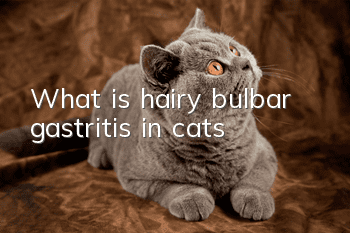
Trichoball gastritis occurs when cats inhale shed hair into the stomach when grooming, and the hair accumulates in the gastrointestinal tract to form hair balls. Due to some reasons, the hair balls cannot be discharged in time, and they are repeatedly stimulated in the stomach to form foreign body gastritis or obstruction. Long-haired cats are more likely to suffer from pilonidal gastritis than short-haired cats.
Symptoms of hairy bulb gastritis:
Cats suffering from hairy bulb gastritis will experience retching and loss of appetite. As a symptom of gradual weight loss, some cats may also experience retching or vomiting hair balls and mucus, and the cat’s stomach will become sensitive.
How to treat hair ball gastritis:
1. Feed cats hair removal cream every week to inhibit the formation and development of hair balls and help cats expel hair balls smoothly. .
2. When choosing cat food, you can choose cat food containing more crude fiber for your cat.
3. If the cat’s condition is serious, you need to take the cat to the hospital for surgery to remove the hair ball.
Related articles

Random articles
- Do cats also like to fight? What are the reasons why domestic cats fight?
- Why do cats like cardboard boxes?
- Summer is coming, don’t shave your cat casually
- How do you know if your cat has developed trust in people?
- It makes sense for cats to be angry. 9 major behaviors not to be committed
- Precautions for post-operative care of cats after sterilization surgery
- Do you know why cats like to sharpen their claws?
- The origin and introduction of the Burmese cat breed
- Care knowledge for key color shorthair cats
- What are the precautions for cat pregnancy?