
Symptoms of dehydration in cats
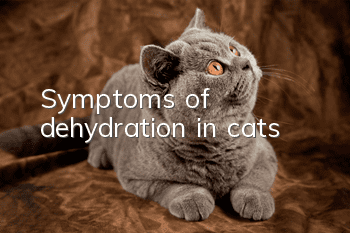
Symptoms of cat dehydration
1. Dehydrated cats will have abnormal behavior
Cats will often lick their lips and put their noses against empty water On the basin, it shows anxiety.
2. Dehydrated cats will have loose skin
Pinch the skin on the back of the cat’s neck, pull it up 3-5 cm, and then release it. The normal skin will rebound quickly. Back. A rebound time of more than 2 seconds proves water shortage.
3. Dehydrated cats will have sticky gums
The moistness of the gums is a good indicator of early dehydration. Normal gums are moist and shiny. If you are dehydrated, your gums may become dry or sticky because less saliva is produced.
4. The color of a dehydrated cat’s urine will become darker
If the cat is dehydrated, the body will take measures to preserve body fluids, and the urine will be concentrated, resulting in a darker color and less urine volume.
5. The eye sockets of dehydrated cats will become sunken
If the eye sockets of healthy cats are slightly sunken and dry, it is a sign of mild dehydration. In severe cases, the third eyelid can be seen. protrude. Touch your cat's paw pads. If they are cold, take him to the doctor immediately, which means he is moderately or even severely dehydrated at this time.
6. Cats that are dehydrated will lose weight. If you find that your cat has lost weight, even by 4%-5%, it means that your cat is seriously dehydrated.
7. Cat dehydration: The cat’s paws are very cold. If the temperature is lower than normal and very cold, the cat may be severely dehydrated at this time.
8. Dehydrated cats will keep walking back and forth next to the empty water bowl and licking the empty bowl. This means that the cat has begun to lack water and needs to replenish the water source in time.
Solutions for cat dehydration
1. Subcutaneous rehydration. When a cat is particularly dehydrated, drinking water will have little or even minimal effect. Subcutaneous rehydration is an ideal method. .
2. Intravenous rehydration. If the cat is severely dehydrated, it is likely to go into shock. Intravenous rehydration can replenish energy and amino acids, and can effectively relieve symptoms.
3. Treat the cause, treat the primary disease after the cause is diagnosed, and cooperate with fluid rehydration to achieve better results.
4. Treat the cat by correcting the electrolyte imbalance in the body, restoring the PH value, and giving the cat infusions to replenish energy and water.
5. If the cat does not vomit and can drink water, it is recommended to feed the cat a large amount of glucose water.
Related articles

Random articles
- How to keep your cat warm when your home is cold
- What does the key color of the puppet mean?
- Why do Korat cats need to be neutered?
- What types of cat litter are there? Teach you how to choose cat litter correctly!
- How to deal with your cat’s stress response? Three major diseases caused by stress response!
- How often should you bathe your cat? How to bathe a cat at home?
- Why does a cat vomit after not eating?
- How to distinguish the coat color of folded-eared cats? There are many kinds of coat colors of folded-eared cats.
- When is the best time to give the first dose of cat triplex?
- How to lose weight for obese cats How to make a weight loss plan for cats