

It is best not to remove third eyelid gland hyperplasia, commonly known as "cherry eye"!
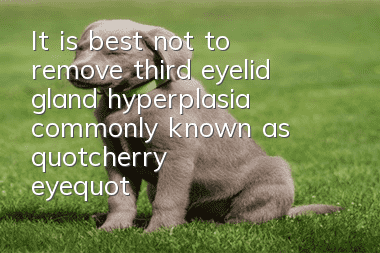
Facial gland hyperplasia in the third eye, commonly known as "cherry eye". A few years ago, most domestic small animal doctors performed direct removal surgery, but many sequelae occurred, especially dry eye syndrome. What are the causes and how are they solved now? It is necessary for pet owners to understand.
Predisposing factors:Most dogs are mainly fed high-protein and high-energy animal feeds, such as beef and beef liver. They are also fed braised duck meat, dried braised duck, lard residue, etc.
Susceptible speciesAmerican Cocker Spaniel, English Bulldog, Beagle, Boston Terrier, Pekingese, Shih Tzu, Pug and other dog breeds with protruding eyes.
Clinical symptomsIn the early stage, the third eyelid is swollen due to infection, and the conjunctiva is flushed and tearing. Gradually, a small tooth-like mass appears at the inner corner of the dog's lower eyelid, which is pink. In some cases, it occurs in both eyes at the same time, which is pink. The tumor increases in a short period of time, usually growing to the size of a pea within 3-7 days. It usually occurs in one eye and soon after in the other eye, and sometimes it occurs in only one eye. Some sick dogs often scratch their eyes with their front paws, which may cause mechanical damage to the cornea or aggravate eye inflammation. Purulent secretions may be seen in the later stages. At this time, the use of antibiotic eye drops may temporarily have some effect on eye inflammation, but it cannot fundamentally solve the problem. Eye inflammation often reoccurs after a few days.
Treatment programs1. The traditional surgical method is to remove the hyperplastic eyelid glands, but the third eyelid gland is an important gland that secretes tears, accounting for 30-50% of the total tear volume. Therefore, removal of the gland will result in loss of tears, which may lead to dry eye syndrome as the animal ages.
2. The current correct treatment method is to perform third eyelid gland embedding surgery. Through the embedding surgery, the proliferated glands can be restored to retain their gland function and avoid the occurrence of iatrogenic dry eye disease.
Related articles

Random articles
- Early symptoms of canine distemper in dogs
- How to set rules for your dog at home!
- How about Youlang dog food? Is Youlang dog food natural food?
- How scary is gastric torsion in dogs?
- If you want your pet to be beautiful and healthy, you must pay attention to 4 care areas every day!
- What kind of food do Border Collies eat?
- How to remove French Dou hair
- Can a dog’s coughing and retching heal on its own?
- Tips for giving eye drops to dogs
- Which dog fights best? Who is the final winner?