

Symptoms of pleural empyema in pet cats (cat empyema)
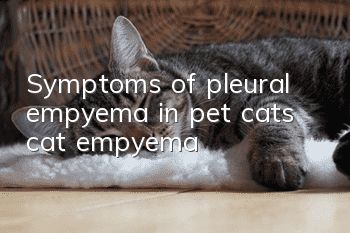
The technical term for feline empyema is feline pleural empyema (feline pyothorax). From the literal meaning, we can understand that pus accumulates in the pleural cavity of cats. This disease is usually caused by thoracic trauma, and external bacteria enter the chest cavity, causing the cat's pleura to become suppurated and inflamed.
When a cat suffers from pleural empyema, the symptoms are sometimes acute and sometimes chronic. In an acute attack, dyspnea immediately occurs and the body temperature rises. When sepsis occurs, the body temperature drops and even shock occurs. In chronic attacks, it usually manifests as low-grade fever, loss of appetite, chronic weight loss, poor energy, and dyspnea. When the course of the disease is prolonged, it may also manifest as sepsis.
Diagnosing this type of disease is actually quite easy. Just do chest auscultation and percussion to determine whether there is pleural effusion and roughly estimate how much effusion is in the pleural cavity. However, in order to make a more accurate judgment and see whether there is any intrathoracic disease, it is essential to take X-rays from two directions.
Related articles

Random articles
- What to do if Himalayan cats have urinary stones
- How old is a five-year-old cat to a human?
- How to take care of a two-month-old cat that has just arrived at a new home
- Love cats but are allergic? Scientists are here to help you suck cats to your heart’s content!
- Can the cat litter box be placed in the same cage as the cat food bowl?
- Can cats eat shrimp? Is it healthy for cats to eat shrimp?
- Burmese cat appearance characteristics and breed personality
- How to raise a one-month-old kitten? Tips for raising a one-month-old kitten
- The cat has eye mucus in his eyes after eating. It needs to be relieved as soon as possible.
- This cat suffered from severe conjunctivitis in both eyes and became blind. Unexpectedly, it turned out like this a few days later!