
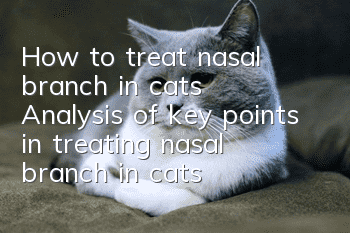
How to treat nasal branch in cats? Analysis of key points in treating nasal branch in cats
Treatment of cat nasal branch should first be carried out with spatial isolation and thorough disinfection of the living environment; without affecting eating, anti-inflammatory and antiviral eye drops can be dropped into the eyes and nose, and antibiotics and lysine can be fed; Cats with nasal branch in the middle stage need subcutaneous injection of electrolytic saline and feeding glucose oral solution for treatment.
1. If symptoms appear in the early stage, you must be isolated!
It is not enough to put them in a cage, but to "spatially isolate" them, and keep them in different areas from those who are not sick. Remember not to allow air convection. And disinfect all used utensils and floors.
The feeding method should be to feed the unaffected cats first, and then feed the infected cats. And pay attention to washing and disinfecting tableware separately.
2. If initial eye and nose symptoms are not severe and do not affect eating, anti-inflammatory and antiviral eye drops (ointment) can be applied to the eyes and nose, alternately, once every 3 hours, and antibiotics and lysine can be taken orally .
Medication recommendations: Levofloxacin/tobramycin eye drops + acyclovir eye drops + amoxicillin + lysine + immune oral drugs (transfer factor/astragalus polysaccharide).
Electrolytic multivitamins, VB, and probiotics should be added to the diet to prevent electrolytic imbalance and food refusal.
3. The mid-term symptoms are generally more serious. The cat will refuse to eat, become thin quickly, and the body temperature will continue to be high due to concurrent inflammation. The eyes and nostrils will be inflamed and swollen, the mouth will be inflamed, and the eyes and nose will be purulent. Blockage of secretions etc.
For mid-term symptoms, my personal suggestion is: first use sterile water to clean the mouth and nose secretions, and then increase the use of hormonal eye drops (such as dexamethasone eye drops) for two days in the initial treatment method. Helps reduce swelling quickly. Also inject or instill ceftiofur sodium/penicillin + dexamethasone (up to three days) + interferon + VB injection (forced feeding injection) + injection & oral immune drugs (astragalus polysaccharide/high immune factor) + Force-feeding + subcutaneous injection of electrolytic saline + oral administration of a mixture of physiological saline and glucose, and pay attention to keeping the sick cat warm.
If there are oral ulcers, you can wipe them with iodine glycerin and take vc orally.
On the basis of the above, nebulization can be done, which is conducive to further treatment. Antibiotics such as amikacin and sarafloxacin can be used for nebulization.
Note: Do not use acetaminophen and other antipyretic drugs due to overheating caused by inflammation in the body, because it will cause symptoms such as cat poisoning. Antipyretics will recover on their own on the basis of eliminating inflammation.
4. Later symptoms. In the later stage, due to the cat's resistance problems and the acid-base imbalance of the body after long-term illness, other complications will occur, such as diarrhea, comprehensive inflammation, convulsions and spasms, etc. At this time,This is when the mortality rate is highest.
Note: The best treatment period for cats with nasal branch is the early stage. It is recommended to send them to the hospital for treatment in time. This treatment method is for reference only. Considering that each cat’s symptoms and physical condition are different, the medication should also be based on the actual situation. Adjustment; follow doctor's advice carefully.
Related articles


Random articles
- Do kittens meow when they are born?
- Why does my cat have a runny nose?
- What to do if a kitten eats cat litter
- What are the side effects of lactulose for cats with constipation?
- What are the cat training techniques? A must-read for every poop scooper!
- What should I do if my cat is too greedy?
- Communication with cats is more important than training, so that you can get along with cats better!
- What should I do if my cat eats cat litter?
- Why should cats eat cat grass? What is the scientific basis for giving cats grass?
- How much does a Turkish Van cat weigh?