
What should I do if my cat has pneumonia? How to treat pneumonia?
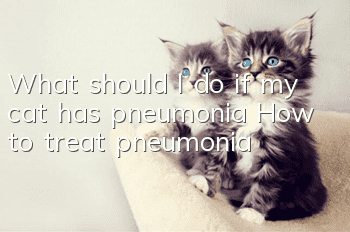
What should I do if my cat gets pneumonia? Feline pneumonia is an acute or chronic inflammatory change in the lungs and bronchioles caused by various stimuli, often secondary to a cold. In spring and late autumn, cats are prone to disease due to cold, dampness, poor management and other reasons.
The main symptoms of sick cats are: lack of energy, loss of appetite or refusal to eat, curling up in the cat cage, disheveled coat, and body temperature rising to about 41°C. The nose is dry and cracked, and secretions flow from the nostrils, which are serous and mucus in the early stage and purulent in the later stage. Progressive dyspnea accompanied by obvious abdominal breathing and increased respiratory times. There is a short cough, the breath sounds are increased, and wet rales can be heard. Increased white blood cell count.
The disease can be treated by intramuscular injection of 200,000 units of penicillin G sodium twice a day; antibiotics such as kanamycin, gentamicin, and cephalosporin can also be used.
It is very important to provide oxygen in a timely manner to relieve hypoxia in cats in the early stages of pneumonia. If conditions permit, oxygen can be supplied to sick cats through masks or oxygen cages.
To clear secretions, mucolytic agents, expectorants, etc. may be used as appropriate.
Related articles
Random articles
- Cat poops with blood
- Why do cats like to stick out their tongues? Cats sticking out their tongues may be sick
- The inside of the cat's neck feels like a tumor
- How to feed apples to cats?
- Why do cats pick the biggest ones in a litter?
- How to train a cat to obey the magic scratching discipline? Cat training!
- Four elements of cat training, a way to make your cat come to you as soon as you call it!
- What to do if a cat loses hair in a large area on its ears? I’ll teach you a simple and useful method!
- What should I do if my cat has diarrhea?
- What should I do if my cat doesn’t sleep at night and is always excited? Spend more energy on it!