

What should I do if my cat has staphylococcal disease?
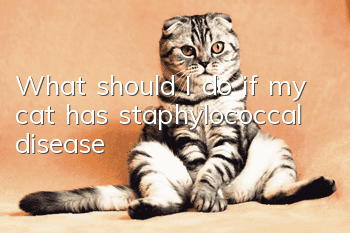
What to do if a cat suffers from staphylococcus disease? Feline staphylococcus disease is a common and frequently-occurring disease in young cats. It is clinically characterized by umbilical suppuration and hemorrhagic pneumonia.
Staphylococci are widely distributed in nature and can be found in the air, soil, sewage and wet ground, so there are many opportunities for infection. The disease is particularly likely to occur when a cat is born, from the umbilicus and skin wounds of the kitten, and from the kitten inhaling the milk of a mother cat with mastitis.
When a kitten sucks the bacteria-carrying milk of a mother cat suffering from mastitis; or because the kitten's litter box is unclean, moist, and dark, the kitten's umbilicus is easily infected with Staphylococcus aureus. The former often presents with small purulent nodules on the head, while the latter often presents with red, swollen and purulent umbilicus. When hemorrhagic pneumonia occurs, breathing is often difficult and the patient eventually convulses and dies.
In the treatment of this disease, the local area should be drained and flushed with potassium permanganate solution or 3% hydrogen peroxide solution, then apply 3% iodine tincture, and then sulfamethoxazole. Systemic antibiotic treatment, such as penicillin 10,000 units per kilogram of body weight, is given by subcutaneous injection once every 6 hours for 3 days.
Related articles

Random articles
- How to train a cat to go to the toilet on its own?
- How to train an Occi cat not to bite? Change your living habits!
- Why does the cat’s butt stink?
- What should pregnant cats eat to supplement their nutrition?
- How to check if a cat has ringworm?
- There are good ways to choose and buy good and cheap cat food
- How often should you use catnip? Is catnip addictive for cats?
- What is the smell that cats hate the most?
- How is feline distemper spread and what are its symptoms?
- Where do fleas go after cats are dewormed?