
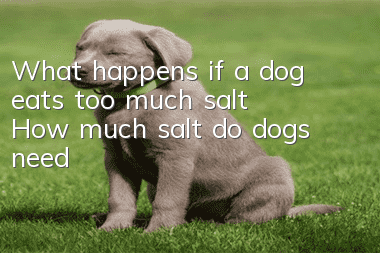
Do dogs need salt? How many are needed? Why don't you come in and take a look?

// Intake of appropriate salt is very important for dogs //
Salt is essential in our lives, and it is equally important for dogs.
Ingesting appropriate amounts of salt for dogs can ensure their health, replenish their physical strength, and also keep their fur shiny and less likely to fall off.
Let’s talk about how salt helps dogs
1) Salt can maintain dogs’ physiological functions and maintain electrolyte balance. This is not only because table salt contains sodium chloride, a small amount of iodine, calcium and some trace elements, but table salt can also slightly irritate the gastrointestinal mucosa, increase gastric acid secretion and strengthen digestion.
2) Insufficient salt in the dog's body will cause insufficient secretion of digestive juices and reduced gastric acid concentration, leading to symptoms such as fatigue, collapse, loss of appetite, and decline in neurological function.
3) Salt can stimulate the dog’s saliva secretion and promote other digestive enzymes to work. It can also improve the taste of feed and increase appetite.
4) Ingesting salt can also absorb a small amount of magnesium and calcium, which are indispensable nutrients for dogs.
// How much salt do dogs need to take in every day //
Dogs need much less salt than humans. This also depends on the dog’s weight. Let’s talk about a specific concept.
The daily intake of salt for dogs is 0.15-0.18g/kg
(For a dog weighing one kilogram, the daily intake should be 0.15-0.18g)
For example, A dog weighs 25kg and needs 3.75-4.5 grams of salt daily. The salt content fluctuates according to the amount of exercise. Dogs with a high amount of exercise consume more salt every day.
If you eat dog food for a long time, there is no need to supplement it, because the feed itself already contains an appropriate amount of salt.
// Adverse consequences of excessive salt intake //
I mentioned earlier how salt intake helps dogs, that is Within the standard intake range.
Excessive intake can cause many harms, so poop collectors, please do not give your own food to your dog. Human food is too salty for dogs.
1) Feeding too salty food for a long time will cause damage to the dog’s stomach and kidneys, affecting their health.
2) Excessive intake of salt may cause skin diseases in dogs.
3) Excessive salt intake but insufficient water replenishment can cause salt poisoning in dogs, which is very serious.
Symptoms of salt poisoning
Dogs will have behavioral characteristics of drinking a lot of water, followed by diarrhea (watery diarrhea), anorexia or waste food, and dogs will be severely out of shape, especially those between 2 and 5 months old. Dogs with severe illness die within 1 to 2 days of illness, and some dogs develop epileptic-like symptoms within 6 to 7 days of illness with long illness.
Treatment of salt poisoning
If found early, go to the nearest hospital to give the dog an enema, flush the gastrointestinal tract to eliminate salt, infuse sugar water to reduce the salt in the blood and promote excretion, and use calcium gluconate infusion to relieve cranial nerve symptoms.
Adult dogs are more tolerant and can recover with treatment after symptoms appear, but puppies cannot withstand severe intestinal damage and cranial nerve symptoms, and most of them end up dead.
4) Excessive salt in the body will cause dogs to drink too much water, causing diarrhea, nephritis, hypertension and other diseases.
Related articles


Random articles
- Can dogs eat glutinous rice? Glutinous rice will affect the gastrointestinal health of dogs!
- Can a dog have an abortion? It is possible within a certain period of time!
- Can dogs eat horseshoes? Feeding in small amounts is beneficial!
- Can dogs eat raw chicken racks? It is equivalent to feeding parasites to dogs!
- Can dogs eat beef jerky? Just don’t give it to the kind that humans eat.
- Large Dog Breeds Do you know?
- Can a dog be bathed during menstruation? Definitely not!
- Can dogs be neutered? Neutering can improve the quality of life of dogs!
- Can dogs eat pine nuts? Nut foods are not suitable for dogs!
- An ancient dog breed that has existed for at least five thousand years - the Pharaoh Hound