
What are the symptoms of diaphragmatic hernia in dogs and how to care for it?
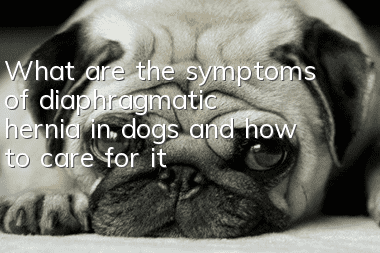
Dogs with diaphragmatic hernia will have difficulty breathing
When dogs have diaphragmatic hernia, the most obvious symptom is respiratory obstruction. At this time, the way they choose to breathe may change. They may even have abnormal sleeping patterns, such as being afraid to lie on their sides. The breathing pattern may also change to abdominal breathing. And they dare not exercise, because excessive exercise will also affect their breathing.Dogs with diaphragmatic hernia will vomit
Due to the contents entering the abdominal cavity, the dog may have a loss of appetite, and vomiting may also occur without eating. Accompanied by constipation. Dogs may also experience pain in their abdomen, which can be intense. In severe cases, vomiting of blood may occur.Complications of diaphragmatic hernia in dogs
The herniated intestines and stomach may be torsion, leading to rupture or obstruction. Chronic diaphragmatic hernia may cause pneumonia in dogs.Dogs suffering from diaphragmatic hernia cannot recover on their own, and can only be treated through surgery, which is also the best method for them. Surgery is required to resew the ruptured hernia hole. In fact, the operation is not very difficult. The most difficult part is anesthesia; when the dog's lungs are squeezed, their breathing may be suppressed and the heart suddenly stops. Therefore, when a dog has a diaphragmatic hernia, it is best to Send him to treatment as soon as possible.
How to care for diaphragmatic hernia in dogs
1. Isolate the dog from other pets and put it in a relatively quiet place to avoid external noise from affecting and irritating them, let alone let them carry out activities. Vigorous exercise avoids aggravating the condition and is not conducive to treatment.2. Feed them as little food as possible, especially food that is not conducive to digestion, to avoid squeezing the lungs and causing greater harm to the dog.
3. In order to allow the dog to breathe relatively freely, try to keep them in a posture with the front high and the back low.
4. Reduce the number of times you take your dog for a walk and avoid letting them walk. It is recommended that if you must let them go out, it is best to hold them.
Related articles
Random articles
- What's wrong with dogs not eating in autumn? Of course, if your mouth feels uncomfortable, you won't be able to eat!
- Can dogs eat shiitake mushrooms? Be careful with mushroom foods!
- Do dogs have fleas? What should I do if my dog has fleas?
- Do dogs eat bean sprouts? Poisoning is not a trivial matter!
- Can a dog’s hair be cut? There are ways to trim it!
- What to do if your dog has diarrhea in autumn. Don’t seek medical treatment in an emergency!
- Four major reasons why dogs have unformed poop in autumn and how to treat it!
- What does it mean when a cat follows you? Is it a bad omen or a sign of wealth?
- What causes diarrhea in dogs in autumn? Don’t let your dog lie directly on the ground anymore!
- What should you feed your dog when shedding in autumn? The secret to keeping your dog’s hair soft and silky