

What are the oral diseases of dogs? You should be wary of these diseases
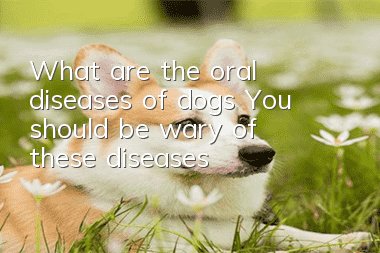
Common oral diseases in dogs: dental plaque
The oral cavity is an environment full of various microorganisms, and dental plaque is like a "bacterial community" composed of different bacteria. These "communities" settle in On the tooth surface, between teeth or on the surface of dentures. Since the "community" is firmly rooted, it cannot be washed away or rinsed away by water and can only be removed by mechanical means. If the owner has never taken care of the dog's teeth, there is likely to be plaque caused by food residue and bacteria on the dog's teeth.Common oral diseases in dogs: dental calculus
Dental calculus is a mineral agglomeration attached to the surface of the teeth. It is formed by the carbonization of tartar accumulated from food residue in the dog's mouth. Oral bacteria multiply to form dental plaque. After the plaque calcifies, it forms agglomerates and adheres to the surface of the dental calculus, making the dental calculus more and more serious. The color of the dental calculus becomes yellow, brown or even black. If you want to remove severe dental calculus, you generally need to go to a pet hospital to have your dog's teeth cleaned.Common oral diseases in dogs: Gingivitis
The continuous deposition of dental calculus will cause gaps between the teeth and gums, which provides a good breeding ground for bacteria to multiply, leading to gum disease. inflammation. To treat gingivitis, we must first remove the cause, surgically remove tartar, control plaque, and correct all factors that cause plaque retention and irritation to the gums.Common oral diseases in dogs: periodontal disease
Periodontal disease is caused by the worsening of dental calculus and gingivitis. When the periodontal tissue becomes inflamed, it is easy for dogs to develop increased saliva and bad breath. , gum swelling, suppuration and bleeding, which can cause teeth to shake or even fall out in severe cases.Common oral diseases in dogs: tooth decay
Although dogs are not as prone to tooth decay as humans, dogs can also develop tooth decay if their diet is unreasonable. A dog's normal food should be mainly dog food, appropriately paired with some nutritious vegetables to enhance physical fitness. Try not to feed your dog some sugary and soft food, because sugar will not only decompose more acidic substances in the mouth, but also become a nutrient for oral bacteria, accelerating the formation of tooth decay. If your dog often eats too soft food, it will easily produce food residue, which will adhere to the surface of the teeth. Over time, bacteria will breed, produce acidic substances, corrode the teeth, and form tooth decay. Related articles

Random articles
- Can dog probiotics be used for a long time?
- What should I do if my dog eats 999 Cold Elixir?
- What breed of dog is it without a tail?
- What to do if a pregnant dog eats chicken bones
- Can dogs eat mint? You are really brave, give mint to your dog!
- Why is there static electricity on your dog? Do you want to know how to eliminate static electricity?
- You will understand the symptoms of acute gastritis in dogs after reading this!
- Will the dog recognize its new owner if it is lost? Take it home in time
- The chance of getting rabies if bitten by a domestic dog. Treat rabies correctly
- Can dogs know how to swim? How to teach a dog to swim?