
The Importance of Dog Teeth. Protect Dental Health Start Now
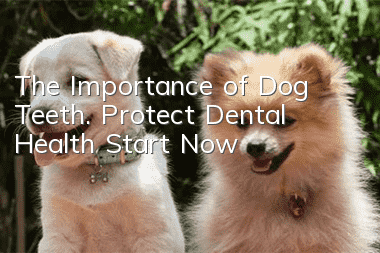
The Importance of Dog Teeth
Dogs have 42 teeth, 20 upper teeth and 22 lower teeth. The pointed canine teeth at the front are mainly used for hunting and attacking enemies. When faced with danger or provocation, dogs will grin and deliberately expose their long, pointed teeth to show their strength and scare away enemies, thus playing an important role in protecting themselves. Some of the molars at the back of your dog's mouth are serrated and are used to shred food.Dog teeth-related diseases
1. Dental calculusDental calculus is a mineral agglomeration attached to the surface of the teeth. It is formed by the carbonization of tartar accumulated from food residue in the dog's mouth. . Oral bacteria multiply to form dental plaque. After the plaque calcifies, it forms agglomerates and adheres to the surface of the dental calculus, making the dental calculus more and more serious. The color of the dental calculus becomes yellow, brown or even black. If you want to remove severe dental calculus, you generally need to go to a pet hospital to have your dog's teeth cleaned.
2. Gingivitis
The continuous deposition of dental calculus will cause gaps between the teeth and gums, which provides a good breeding ground for bacteria to multiply, leading to inflammation of the gums.
3. Periodontal disease
Periodontal disease is caused by the worsening of dental calculus and gingivitis. After the periodontal tissue becomes inflamed, it is easy for dogs to have increased saliva, bad breath, swollen gums, suppuration and bleeding. , which can cause teeth to shake or even fall out in severe cases.
4. Tooth decay
Although dogs are not as prone to tooth decay as humans, dogs can also develop tooth decay if their diet is not reasonable. A dog's normal food should be mainly dog food, appropriately paired with some nutritious vegetables to enhance physical fitness. Try not to feed your dog some sugary and soft food, because sugar will not only decompose more acidic substances in the mouth, but also become a nutrient for oral bacteria, accelerating the formation of tooth decay. If your dog often eats too soft food, it will easily produce food residue, which will adhere to the surface of the teeth. Over time, bacteria will breed, produce acidic substances, corrode the teeth, and form tooth decay.
Causes of bad breath in dogs
Dogs with "bad breath" are mostly due to problems with their oral hygiene and teeth. Because a large amount of food residue in the dog's mouth is not cleaned in time, bacteria will breed and lead to dental diseases such as tartar and calculus. A large amount of yellow and black tartar and calculus accumulate on the dog's teeth, which can easily produce an unpleasant odor in the dog's mouth. Cleaning your dog's mouth regularly can effectively alleviate the dog's "bad breath" problem. Related articles
Random articles
- Can dogs eat peaches? Why do dogs get poisoned if they eat peaches?
- Symptoms of Leptospirosis in Dogs Zoonotic Virus Latent in Water - Leptospira
- There is clear water in the dog's nostrils. The reason for the clear water is not just the cold!
- Why do Shiba Inu have such a bad temper? Do you still like this type of Shiba Inu?
- Shiba Inu Face Hug Formula Daily diet is very important!
- What will happen if your dog eats too much salt? What good will killing your dog do to you?
- Can dogs eat yam? Is it good for dogs to eat yam?
- How to correct your dog’s bad behaviors. The 4 bad behaviors of dogs that need to be corrected most!
- Dog recall training Dog recall training
- Corgi delivery process What should you pay attention to during Corgi delivery