

How do dogs avoid the heat in summer? Scientific guide to avoiding the heat
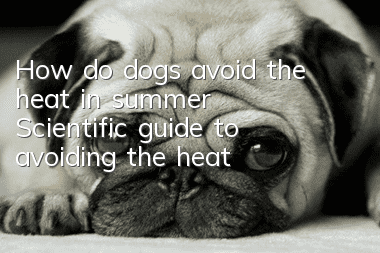
Symptoms of summer heatstroke in dogs
Dogs’ bodies have very poor adaptability to external temperatures, and they are one of the animals prone to heatstroke. It manifests as elevated body temperature, shortness of breath, restlessness, dizziness and convulsions. In severe cases, vomiting, pulmonary congestion, nasal congestion, and even death may occur.
How do dogs avoid the heat in summer?
1. Do not go out to walk your dog in hot weather. The main areas of heat dissipation in dogs are the soles of their feet and their tongues. In the hot summer, the road surface temperature is higher than the air temperature. The heat dissipation function of the soles of the dog's feet is weakened, making it easy for heat stroke. If the ground temperature is too high, it is easy to cause burns on the foot pads.
2. Fill the used Coke bottle with water, cap the bottle and put it in the refrigerator. When the water is completely frozen, take it out and put it into the doghouse. Dogs will naturally run off to enjoy their "summer retreat." Or prepare an ice pad for your dog.
3. Turn on the fan or turn on the air conditioner appropriately to maintain indoor ventilation.
4. Make sure the dog has enough drinking water and change it regularly to ensure the water is fresh and clean.
5. Never lock your dog in the car or trunk when you take your dog out, as this may cause your dog to die of heatstroke.
6. Don’t let them engage in strenuous exercise.
Misunderstandings about dogs avoiding the heat in summer
1. Take frequent baths. Pet skin can secrete a protective film. Bathing too frequently will wash off the protective film, which is detrimental to the pet's health. In summer, small dogs should be washed once a week, and large dogs should be washed once every half month.
2. Shaving to dissipate heat. Dogs have almost no sweat glands on their body surface, so shaving their fur doesn't actually help dissipate heat very well. However, for long-haired dogs, it is still necessary to clean and cut the long hair on the body to enhance convection conduction, which is beneficial to the heat dissipation of the body surface.
Old dogs need to be cared for more carefully (special reminder)
Young dogs have better body temperature coordination and generally do not need special care; however, dogs over 89 years old need Special care. Elderly dogs’ body temperature rises in summer, air pressure changes, and their cardiopulmonary function weakens, which may lead to potential heart disease.
Related articles

Random articles
- Can dogs use human shower gel? What will happen if dogs use human shower gel?
- Everyone who raises a Corgi regrets it. You have to go through these 6 pains raising it.
- What should you pay attention to when raising a dog in summer? How to take care of your dog in summer
- What diseases are dogs most likely to get in summer? There are four diseases dogs are susceptible to in summer.
- What should I do if my Samoyed doesn’t like to drink water in summer? Tips to get my Samoyed to take the initiative to drink water
- What should dogs pay attention to when swimming in summer? Essential rules for dogs swimming in summer
- Precautions for dog bathing in summer Four key points for dog bathing in summer
- Tips for dogs to prevent heatstroke in summer A battle to prevent heatstroke and cool down for dogs
- How can Teddy prevent heatstroke in summer? Scientifically avoid heat stroke and prevent air-conditioning disease
- What to do if dogs have skin diseases in summer. Dogs are more likely to get skin diseases in summer.