
How to care for your dog’s ears. Tips for caring for your dog’s ears.
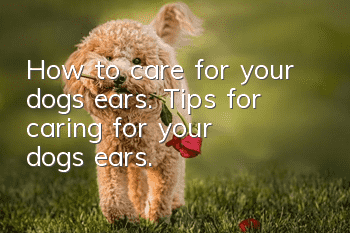
Dog Ear Care: Daily Check
Owners should insist on checking their dog’s ears every day. First check the outside of the ears for tangled hair and parasites. Then check whether there is earwax in the ear canal. A small amount of earwax is normal, but if there is a large amount of reddish-brown, streaky or smelly earwax, it means that the dog needs to see a doctor. Check your dog's ear hair. The ear hair in the ear canal can accumulate dirt, bacteria and moisture, which can eventually lead to infection. Therefore, it should be trimmed regularly to make the ears cleaner and more beautiful.
Dog Ear Care: Cutting Ear Hair
For puppies with floppy ears, the hair under the ear holes and inside the auricles needs to be cut short to enhance airflow and reduce the chance of infection. For dogs with long hair, it is best to trim the hair near the ears to avoid accumulation of dirt. When trimming the ear hair, first pull the ear back to the top of the head, then flatten it against the skull, and use blunt scissors to trim the ear hair, being careful not to scratch the dog's skin.
Dog ear care: ear cleaning
Healthy dogs do not need to wash their ears. Only when the dog’s ear canal is diseased, the dog’s ears need to be washed and coated according to the doctor’s advice. medicine. The method of cleaning the ears is to fill the dog's ear canal with ear cleaning water, rub it gently for 3-5 minutes, and then let the dog shake out the dirt in the ear canal on its own. Be careful not to use cotton balls or cotton swabs to pull out the dog's ears. This will cause damage to the dog's ear canal, and the dog will also feel pain and become resistant to ear cleaning. In the summer, the ear cleaning water can be used directly. In the winter, please heat the ear cleaning water to a temperature close to the dog's body temperature before using it. Pouring the cold ear cleaning water into the ear canal will also cause pain to the dog.
Related articles
Random articles
- Diagnosis and treatment of dog fever
- What should I do if my pet dog is allergic to vaccines?
- How to brush your dog’s teeth? What should I do if my dog refuses to brush his teeth?
- What should I do if my dog keeps scratching and biting?
- What are the most common oral and dental diseases in dogs? Dog Oral Care!
- What are the training tips for Australian Cattle Dogs?
- Research shows that dogs raised in cities are more likely to develop social anxiety than dogs raised in rural areas
- How to train a Great Pyrenees
- Why do dogs sigh?
- What are the symptoms of dystocia in dogs, and what should I do if my dog has dystocia?