

What to do if your dog coughs, owners don’t panic
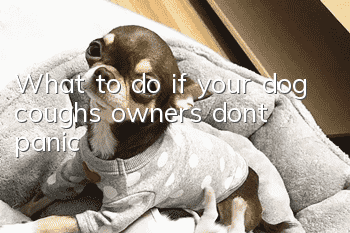
How to deal with dog cough
When a dog coughs, the owner does not need to be overly nervous. The owner should first analyze the cause of the cough and then treat it accordingly.1. Under normal circumstances, mild and infrequent coughs can be relieved naturally as long as the sputum or foreign matter is discharged, without the need for antitussives.
2. For severe dry cough without phlegm, apply compound licorice tablets antitussive to relieve cough and treat inflammation at the same time. Medication and dosage: Compound licorice tablets 1-2 tablets/time, taken orally, 3 times a day; Yandi and roxithromycin 100-150 mg/kg body weight, taken orally, 2 times a day; Lijunsha 0.2-0.3 g/time , 3-4 times a day, orally.
3. For those with phlegm, thick phlegm, especially if it is purulent and difficult to cough up, expectorants should be used, and it is generally not suitable to relieve cough. Medication and dosage: Ammonium chloride 0.2 mg/kg body weight, orally, twice a day; Potassium iodide 0.2-1 g/time, orally, 3 times a day; Compound licorice mixture 5-10 ml/time, orally, 3 times a day.
4. If the cough is caused by an infectious disease such as canine distemper, the dog's body temperature should be monitored at any time, observed for other symptoms, and sent to the doctor if necessary.
Introduction to dog cough
1. Dog cough is a normal protective reflex. Its function is to remove foreign bodies in the respiratory tract, especially in the trachea and main bronchi. However, if the dog turns to a persistent and severe cough, especially a dry cough, it will cause more serious consequences.2. Many owners feel nervous when they hear their dogs coughing, thinking that their dogs are sick. In fact, this is not the case. In addition to dogs coughing when they wake up or are excited, there are many other reasons. For example, dogs will cough when they suddenly go from a warm indoor to a cold outdoor, and are stimulated by cold air, smoke or dust.
Common causes of cough in dogs
1. Upper respiratory tract diseasesNasopharyngeal abnormalities: rhinitis, sinusitis, foreign bodies or tumors in the nasopharynx, tonsillitis and tonsil tumors wait.
Larynx abnormalities: inflammation, foreign bodies, trauma and tumors, etc.
Tracheal abnormalities: inflammation (inhalation of irritating substances or smoke), viral or bacterial infection, foreign body, tumor or tracheal collapse.
2. Lower respiratory tract diseases
Tracheal abnormalities: inflammation, viral or bacterial infection, parasitic infection, allergies, tumors or foreign bodies, etc.
Lung abnormalities: inflammation, viral or bacterial infection, fungal infection, aspiration pneumonia, pulmonary edema and tumors.
3. Cardiovascular diseases
Heartworm, pulmonary vascular obstruction or embolism, congestive heart disease and tumors, etc.
4. Other causes
Abnormalities in the esophagus: inflammation, foreign bodies or swelling, etc.
Pleural abnormalities: inflammation, bacterial or fungal infection, hernia and tumor, etc.
Related articles

Random articles
- Do dogs have to be vaccinated? How dare you not vaccinate your dog!
- How to keep dogs away from skin diseases. If you do this, will you see if your dog will still be infected with skin diseases?
- Why do dogs need to be dewormed? How to tell if a dog has parasites?
- How to treat pustules on dogs? Have you noticed pustules on dogs?
- How to treat foreign body pneumonia in dogs? What owners need to know
- What is the reason why dogs have a lot of diarrhea? It may be because of enteritis!
- Symptoms of dog gastritis. Let me tell you what are the causes of dog gastritis!
- How to deworm golden retrievers? Let me tell you these tips on how to deworm golden retrievers!
- Why do dogs have worms in their poop? How to deal with it? Have you dealt with the worms in your dog’s poop?
- Dog Pleurisy Symptoms Dog Disease Tips