

Why can’t dogs eat onions? Are onions poisonous to dogs?
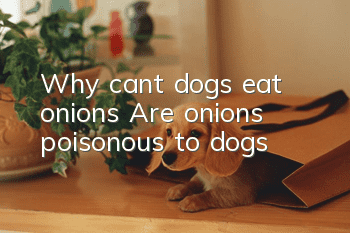
Dogs can be poisoned if they eat onions
Onions can cause poisoning in dogs. Onions contain diallyl disulfide, which oxidizes hemoglobin to form Heinz bodies. Red blood cells containing a large number of Heinz bodies can be phagocytized by reticuloendothelial cells, causing anemia and damaging the bone marrow. Common symptoms include weakness, pale gums, brown urine, and jaundice. Many dogs develop symptoms of poisoning after accidentally eating onions.
How to deal with dogs that accidentally eat onions
If a dog is poisoned by accidentally eating onions, if the condition is relatively mild, it can usually recover naturally by stopping feeding onions. For dogs that have eaten too much onions and have severe hemolysis, they should be sent to the hospital immediately for treatment. They should be given injections of glucose and Ringer's solution, and at the same time, subcutaneous injections of cardiotonic agents such as sodium sodium and diuretics (furosemide), if necessary. Blood transfusion is also required. Therefore, owners must keep an eye on their dogs on a daily basis to prevent them from accidentally eating onions out of curiosity. Owners should not let their dogs try onions out of curiosity. This will have serious consequences and is extremely irresponsible to the dog.
Foods that cannot be given to dogs
1. Alcoholic beverages. Can cause poisoning, coma and death.
2. Avocado leaves, seeds, fruits and bark. This may cause vomiting and diarrhea in your dog.
3. Bones. Bones from fish and poultry may scratch your dog’s stomach.
4. Cat food. Usually contains too much protein and fat.
5. Chocolate, coffee, tea and other foods containing caffeine, theobromine, or theophylline. This can cause vomiting and diarrhea in dogs and is toxic to the heart and nervous system.
6. Citrus oil. Can cause dogs to vomit.
7. Fatty foods. Can cause pancreatitis in dogs.
8. Grapes, raisins, gooseberries, and mangoes. Contains unknown toxins that damage dogs' kidneys.
9. Beer. Causes panting, rapid heart rate, increased body temperature, seizures and death in dogs.
10. Macadamia nuts. Contains unknown toxins that can affect your dog’s digestive system, nervous system and muscles.
11. Marijuana. It can inhibit the dog's nervous system and cause vomiting.
13. Milk. Some adult dogs will develop diarrhea if given large amounts of milk.
14. Moldy or rotten food. Contains a variety of toxins that cause vomiting and diarrhea in dogs.
Related articles


Random articles
- What are the most vindictive dogs? These dogs are "small-minded"
- What should dogs pay attention to in their winter diet? Owners should pay attention to these aspects
- What diseases in dogs can be transmitted to humans? Pay attention to the hygiene and health of dogs.
- Good tempered dogs. These dogs have great tempers.
- Why is there a lump on my dog? It may be a lipoma.
- Why does my dog's poop smell so bad? How can I improve this problem?
- Why do dogs like to eat bones? The secret behind them revealed
- Pay attention to these aspects when raising puppies incorrectly
- What is normal for dogs to have eye mucus? How to deal with excessive eye mucus in dogs
- Symptoms of mental illness in dogs. Have you heard of these mental illnesses?