
Secondhand smoke is also a hidden killer of dogs’ health. The dangers of dogs smoking secondhand smoke
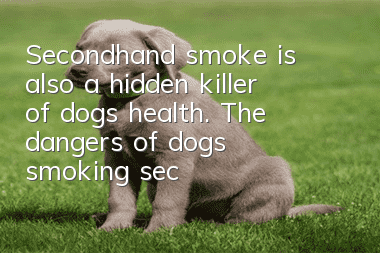
An example of second-hand smoke causing fatal effects on dogs
61-year-old Heather and her 67-year-old husband are both smokers who have been smoking for more than 40 years. They never thought that smoking could be harmful to pets. cause some damages. Heather said that one day her pet dog suddenly felt unwell and fainted. After a veterinary examination, it was found that the dog had black spots on its lungs and that it had lung cancer. When she heard the news, it was like a bolt from the blue. She was very shocked and sad, but she could not undo her mistake of hurting her pet dog.
Short-nosed dogs are more susceptible to cancer
Austrian scientists have found that if dogs live in a smoky environment for a long time, they are highly susceptible to cancer because of their sensitive sense of smell. Research has confirmed that passive smoking is not only harmful to humans, especially children, but also to dogs. Austrian scientist Kurt Agner pointed out that 60% of dogs that live together with smokers for a long time develop lung cancer. Among them, short-nosed dogs are more susceptible to lung cancer. Additionally, another previous study showed that long-nosed dogs who lived with smokers were twice as likely to develop lung cancer than other long-nosed dogs.
Dogs who like the smell of cigarettes will behave in more scary ways
If a dog likes the smell of cigarettes, to be precise, after smoking second-hand smoke, they will behave like we do. Come see something completely irrational. For example: eating cigarette ashes, chewing cigarette butts, eating cigarette packs, approaching someone when you see someone smoking, etc. Therefore, we owners who like to smoke should also pay special attention to the following aspects for the health of our dogs:
1. Quit smoking: This is of course the most complete and ideal solution.
2. Restrict your smoking area: Set a rule for yourself, only smoke in a certain place, such as the toilet, kitchen or balcony, etc., and then restrict the entry of dogs.
3. Don’t litter ashtrays: Compared to smokeless cigarettes and ashtrays, ashtrays are more attractive to dogs because the smell of ashtrays is stronger. So we must put the ashtray out of the dog's reach and clean up the trash can that is dumped on the ashtray in time.
4. Don’t blow smoke into the dog’s nose: When you smoke, don’t blow the smoke from your mouth into the dog’s nose. The dog’s nose is very sensitive. Doing so is harmful to the dog’s health. It's too irritating for the nose. Blowing smoke into a dog's face for a long time may be fun at first, but later it becomes a habit. Not only will the dog's health be affected by long-term secondhand smoke, but it will also seriously affect the dog's sense of smell.
Related articles

Random articles
- When the weather gets hot, pet owners should pay attention to summer syndrome and prevent dog heat stroke in summer.
- Flat-coated Retriever's body type Introduction to the characteristics of Flat-coated Retriever
- A brief introduction to the personality characteristics of the Bichon Frize. The personality advantages and disadvantages of the Bichon Frize.
- What to do about glaucoma and skin diseases in Akita dogs. Dog glaucoma symptoms
- The most practical treatment for Yorkshire terrier diarrhea. Symptoms and treatment of diarrhea in dogs.
- What are the key points of raising a bulldog? Things to note when raising a bulldog
- How can dogs feel safe while sleeping? How can dogs’ sleep quality affect their health? How can they be improved?
- Things to note when weaning Alaskan puppies off milk Weaning time for puppies
- How to choose an external anthelmintic for bully dogs? Which external anthelmintic is best for dogs?
- Basset Dog Training How to Raise a Basset Dog