
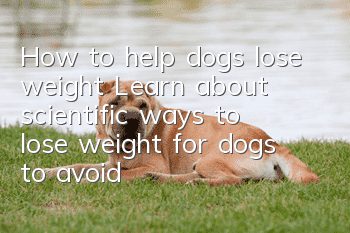
How to help dogs lose weight? Learn about scientific ways to lose weight for dogs to avoid being blind.
First understand 2 steps to lose weight
Before we take a deeper look at nutrients, calories and exercise, there are two necessary steps. First, the veterinary team must recognize the patient's weight gain or obesity, which is best accomplished by comparing the pet's last recorded weight to its current weight and performing a body condition score. Identifying early weight gain before the onset of obesity provides an excellent intervention point. Once the veterinary team establishes any gain or excess weight or body fat, they must raise this issue with the pet owner.
Pet owners must take the second step. We cannot help pets directly, we can only help them through owners. However, I found that many owners are unwilling to cooperate with obesity diagnosis, which makes veterinarians unable to continue to help pets, regardless of repeated conversations with owners. To no avail, the veterinarian finally gave up communicating.
We also know that owners have their own thoughts, lives, priorities, etc. So we can only give suggestions.
Weight loss goals and timing
A weight loss plan for dogs focuses on daily life rather than weight loss and measurements. Research shows that only 6% of weight loss increases a dog's quality of life. Quality of life measurements are more meaningful than pounds lost or inches lost.
Duration depends on weight lost. Simply put, cats can safely lose about 0.5 pounds per month, while dogs can lose 3-5% of their body weight every 30 days. This equates to a weight loss program of six to 12 months for most obese dogs.
Gradual weight loss process:
Determine weight loss goals and target weight
Determine minimum monthly weight
– Cats currently lose 1 to 2% of their weight per month, starting from a minimum of £0.50 per month
– Dogs currently lose 3 to 5% of their weight per month
Determine the total length of time it will take to reach your goal weight
– Up to 9 to 12 months in most cases
–The best time period for most pets is 6 to 9 months
The total cycle is divided into weight loss step intervals of one to three months.
Step-by-step weight loss
The safest and most successful way to help your pet lose weight is to pursue small goals over time. Science tells us that losing weight gradually helps preserve muscle mass and avoid potential nutritional deficiencies. Many pets, especially dogs, experience tremendous weight loss during the first three months and then gain weight over time. This normal physiological adaptive response means you must monitor the patient closely and adjust the plan accordingly, step by step.
This is a stepped weight loss plan. Staged weight loss is like taking the stairs. The starting layer is the dog's current weight, and the ending layer is the dog's ideal weight. There are many ways to move from one level to another, but the safest and most reliable method is to take a series of steps to achieve this goal. Veterinarians and pet owners often want to take a quick lift, but quick fixes often lead to temporary improvements rather than a lifetime of healthy habits. Meaningful change requires patience, perseverance, and discipline. With close support in achieving a series of small goals, lifestyle changes are easier to maintain.
How long does this process take
While there is no one-size-fits-all answer, most dogs should be able to reach their ideal weight within six to 12 months. Healthy dogs can move more vigorously and get results faster. Older dogs or those with arthritis or other medical conditions may need more time. Generally speaking, dogs whose body weight is less than 30% can reach their ideal or normal weight within six months. For dogs that need to lose more than 30% of their current body weight, the time can be extended to nine to 12 months. Due to differences in their physiology, obese cats take longer to reach their ideal weight.
Counting calories
Every pet weight loss plan starts with counting calories. Most pet owners don't know how many calories their pets need each day or how to properly feed their companions. Most pet food feeding advice is not trustworthy. Complete and balanced pet food feeding instructions are for adult, unneutered cats and dogs, which means that if your pet is a patient, you may eat 20 to 30% more than what the label recommends.
During each visit, each pet's precise caloric needs are calculated based on breed, age, gender, concurrent medical conditions and lifestyle.
This Energy Requirement (RER) formula:
Divide your pet's weight in pounds by 2.2, multiply by 30, and add 70.
This formula is used to calculate calories. Neutered cats and dogs weighing 6 to 60 pounds can also use this formula to calculate the daily calories needed.
Stagnation and Worry
The primary reason for failure to lose weight is stagnation and worry.
A stagnation reaction occurs when a pet stops losing weight; annoyance occurs when neurochemical changes prompt behavioral changes.
Both challenges can be successfully overcome. I developed a step-by-step weight loss plan to help alleviate panhandling behavior associated with caloric restriction and identify plateaus as quickly as possible. The gradual reduction in calories coupled with increased protein levels appears to reduce most begging behaviors.
Re-measurement every three months allows me to discover real trends andChange treatment.
The last 5 to 10 percent of weight loss is the most challenging. Lean muscle mass is built at this time; belly fat is reduced. Most pets will need increased physical activity during the final stages of a weight loss program to reach their ideal weight.
Dogs and cats are naturally thin and muscular, with relatively light bones. In order to achieve ideal fitness levels, dogs and cats need to return to the active lifestyles for which they evolved. Dogs who spend most of their time indoors have a hard time developing the strong muscles and tissues needed for ideal healthy body composition. Cats must be encouraged to play games such as food puzzles, "find food," daily playtime, and lots of environmental enrichment. The foundation of a healthy life for our pets.
Related articles
Random articles
- What to do if a dog is poisoned How to quickly detoxify a dog if it is poisoned
- What are the symptoms of dog pain? In addition to barking, dog pain also depends on movement.
- What are the causes of dog death? Top 10 causes of pet death
- What tests are done for a dog’s physical examination? Has your dog had a physical examination?
- When should dogs be vaccinated? What diseases do vaccines prevent?
- What are the common items in dog physical examination? Has your dog ever had a physical examination?
- What kind of mental illness do dogs have? Did you know that dogs can also have mental problems?
- How to clean your dog’s ears Dog’s ears should be cleaned promptly
- Do dogs have to shave their lanugo? What are the rumors about lanugo?
- What are the benefits of dogs eating dog food? Is it better for dogs to eat dog food or to eat?