
How to choose the appearance of Labrador
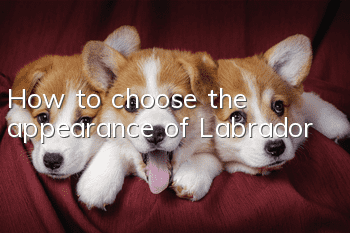
How to choose a Labrador? Whether the Labrador is a purebred, you should pay attention to its coat color, which are: black, yellow, chocolate; also look at the head, which has clear lines and a broad head. It looks quite large; the Labrador's front feet are straight from the shoulders down to the ground, and the toes are densely arched; there is no feathering on the tail, and the surrounding area is covered with thick short and dense coat.
Look at the coat color.
Whether a Labrador Retriever is a purebred should pay attention to its coat color. Purebred Labrador retrievers come in three colors: black, yellow, and chocolate; the coat of Labrador retrievers is double-layered, and it is very magical. A layer of soft down allows them to survive in cold water. To maintain temperature, a thick, hard outer layer of fur is waterproof.
Look at the head.
The head is fresh and clear, and the broad top of the head makes the head look quite big. The top of the head is very broad, making the head look quite large. The forehead should be obvious, the head should be clear-cut, and the lower jaw should be long and powerful, but it should not feel too long. The nose should be wide and the nostrils should also appear wider. The teeth are strong and regular, with a horizontal or scissors bite. The ears hang moderately on both sides of the head and are somewhat set back, hanging low but not heavy.
Look at the front and rear feet.
The Labrador’s front feet are straight from the shoulders down to the ground, with the toes well arched. The hind ankles are moderately bent, the limbs are of moderate length, and are balanced with all parts of the body. When the Labrador walks, there is no sign of the elbows pointing outward. To be more precise, the elbows and legs appear to be in line with the body, but not too close. Straight ahead, no pacing or weaving. The legs form a straight line and all parts move in the same plane.
Look at the tail.
The Labrador's tail is unfeathered and is covered with thick, short, bushy coat all around, resulting in a peculiar rounded appearance that has been described as an "otter" tail. The tail is a unique feature of the breed. Very thick at the base, tapering towards the tip. The tail is an extension of the topline, both at rest and in motion. May be held cheerfully but not curled behind the back.
Related articles
Random articles
- How to bathe Shiba Inu
- What do Pomeranians like to eat?
- What do Labrador puppies eat?
- What to do if your Alaskan puppy has bad mouth
- What are the precautions for taking a bath with Teddy?
- How to cut Shiba Inu nails
- What toys do Pomeranians like?
- How to remove the ears of a teddy dog
- What should Teddy pay attention to in his diet?
- What to do if Teddy poops randomly