

How to calculate the life span of a dog
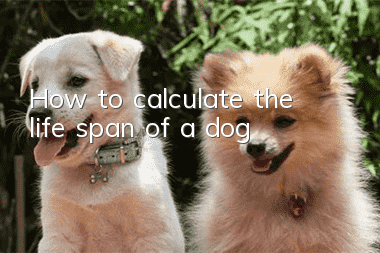
When a dog is one year old, it is equivalent to 31 years old in humans. Dogs grow very quickly in the early stages, and they quickly move from childhood to adulthood in the first year. After rapid maturation, the aging process will slow down, and each year passed is equivalent to 4-7 human years.
By matching the DNA methylation indicators of humans and Labrador retrievers, a human age-dog age conversion formula was derived: Dog equals human age = 16 * ln (dog’s actual age) + 31. If calculated according to this method, a 6-month-old dog is equivalent to 20 human years, while a two-year-old dog is equivalent to 42 human years, and a 10-year-old dog is equivalent to 68-70 human years.
Dogs of different weights, breeds, and sizes age at different rates because of their different life spans. For example, Great Danes and Chihuahuas are both raised until they are 7 years old. Chihuahuas at this stage are still "in their prime", while Great Danes have entered the stage of senior dogs. If their weight continues to increase, their lifespan will also increase. Relatively reduced.
Related articles


Random articles
- What is the difference between racing dogs and ordinary dogs?
- What is the order in which golden retriever dogs change their teeth?
- What is the standard for Central Asian Shepherd Dogs?
- What to pay attention to when buying a dog
- What can Samoyeds eat to gain weight?
- Shorthaired Dachshund Ear Care Methods
- What should puppies eat to make them grow faster?
- How to choose when buying a dog
- What are the personality traits of a Dachshund?
- What kind of food should poodles eat?