

How to care for a cat with seborrheic dermatitis?
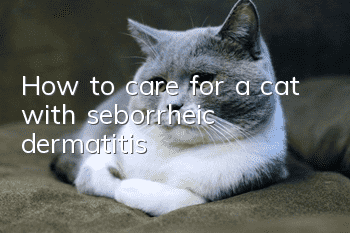
Cats suffering from seborrheic dermatitis usually have dry coats and greasy skin. Therefore, when caring for sick cats, you need to choose the appropriate shampoo to bathe them according to different situations to achieve the best results. Good nursing effect and help control the condition.
Choose an appropriate anti-cortical shampoo based on the dandruff and greasiness of your skin and coat. Generally, there are 4 levels of cortical overflow: 1. Severe dandruff, no oiliness; 2. Moderate dandruff, mild oiliness (the most common); 3. Moderate to obvious dandruff, moderate oiliness; 4. Mild dandruff. Dandruff, obviously oily. This classification can guide the choice of shampoo type. However, each cat's situation may be different, and all circumstances must be considered.
Type 1 is suitable for mild, hypoallergenic, moisturizing shampoos, suitable for animals with mild seborrhea, irritation caused by other medicinal shampoos, or animals whose owners bathe frequently. These products usually contain emollient oils, lanolin, lactic acid, urea, glycerin or fatty acids and are often used in combination with emollient sprays or lotions.
Type 2 should use shampoo containing sulfur and salicylic acid. Both of these ingredients have the effects of promoting keratinogenesis, antibacterial, and relieving itching. In addition, sulfur is antiparasitic and antifungal. Some of these shampoos also contain antibacterial, antifungal, and moisturizing ingredients, which can help control dandruff secondary to pyoderma and Malassezia excess. Shampoos containing ethyl lactate can lower skin pH (it acts as a bacteriostatic or bactericidal effect by inhibiting lipase), normalize keratinization, dissolve fat, and reduce sebaceous gland secretion. These also act as effective antibacterial agents.
Type 3 is suitable for shampoos containing tar. Tar can slow down the synthesis of DNA in basal cells, thereby affecting the formation of cutin. It is often combined with sulfur and salicylic acid. Distillation of wood and coal produces a variety of crude coal tar products. It is also difficult to accurately compare shampoos due to the different technologies and product types used. Finer tars are generally less harsh and more stable, but are also more expensive. The more tar ingredients, the better. Only tar from reputable companies should be used. Tar shampoos often have a distinctive and unpleasant smell, similar to burnt hair. Animal owners often stop using shampoo because they don't like the smell.
Type 4 is often accompanied by greater odor, erythema, inflammation and secondary pyoderma and Malassezia infection. This type requires the most aggressive local treatment. Shampoos containing benzoyl peroxide can remove oil, fight bacteria and flush hair follicles. Because benzoyl peroxide is a powerful degreasing agent that can cause irritation and dryness. Other antibacterial shampoos are more suitable for cats with superficial pyoderma but less oily coats. Most human products contain 5-10% benzoyl peroxide and should not be used as they can irritate cats. The follicular flushing action of benzoyl oxide is ideal for cats with blackheads or demodicosis. Benzoyl peroxide gel (5%) has antibacterial, degreasing, or follicle flushing properties and can be applied topically, e.g.Demodicosis. However, these ointments can be irritating.
Related articles
Random articles
- Will cats get depressed after being neutered?
- How should a cat with ringworm take a medicated bath?
- What should cat owners do if their cats are picky eaters?
- Cultivate your cat’s habit of eating well and avoid being picky eaters!
- How to give liquid medicine to pet cats and how to give tablets
- What are the characteristics of Russian Blue Cats
- Will cats wearing bells affect their hearing? What kind of cats need bells?
- Does a cat like to drink dirty water cause the cat to have diarrhea? The poop scooper should pay attention!
- Raising a cat in this way is equivalent to "slowly killing the cat"!
- What to do if a kitten catches a cold? How to prevent and treat a kitten cold?