
What genetic diseases do Himalayan cats have?
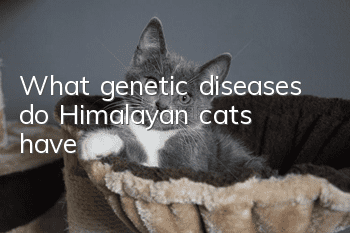
The Himalayan cat is named because it looks very similar to the rabbit with this name, and has nothing to do with the Himalayas. Because its temperament is between Siamese cats and Persian cats, it combines the advantages of both. It is easy to raise and cute. It is especially suitable for people who need mental comfort.
Most Himalayan cats are not active cats; they do not move around all the time. They love to play and are active, but they prefer to lie on your lap. Himalayan cats are beautiful, but they are also a breed with many genetic defects.
Himalayan cat
Skin:
Ringworm
Ehler-Danlos syndrome (skin hyperelasticity syndrome)
The cat's end is black
Idiopathic facial skin tumors
Systemic lupus erythematosus
Drugs:
Sensitive to prednisolone
Gastrointestinal tract:
Portal system short circuit (extrahepatic)
Nervous system:
Hypersensitivity syndrome
basal cell tumor
Ophthalmology:
Corneal rot
Congenital cataract
Urinary system:
Calcium oxalate stones
Blood type:
According to statistics in the United States, 75% of cats have type A and 25% of cats have type B
Related articles


Random articles
- Is it normal for a male cat not to urinate for a day and a half after being neutered?
- Symptoms of cat enteritis
- What should I do if Oriental shorthair cats are afraid of water?
- How to train a snowshoe cat to sleep at night
- Why do kittens’ eyes change color?
- How to prevent cat litter from being brought out
- Do adult cats still need vaccinations?
- Why is it that I walk with a folded ear and a limp?
- Can cats eat human fish oil?
- Are Shandong lion cats smart?