
What to do if your dog’s dental calculus is serious? Protect your dog’s oral health from now on
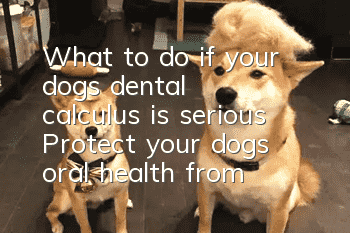
How to deal with dog dental calculus
1. Newly formed dental calculus is soft. Early tartar and plaque can be treated with pet-specific toothpaste and toothbrush, but the cooperation of the dog is required. .2. The newly formed dental calculus is soft and will slowly harden after a period of calcification. At this time, the only way to remove the dental calculus is to vibrate the dental calculus with the probe of the ultrasonic scaling machine.
3. When cleaning your dog’s dental calculus, you should pay attention to the status of gingivitis and periodontal disease.
4. Dogs with severe dental calculus usually need to pay attention to bacterial endocarditis. If the equipment allows, cardiac ultrasound and electrocardiogram examinations are necessary to reduce the risk of anesthesia.
Causes of formation of dental calculus in dogs
1. The concentration of carbon dioxide in saliva decreases, causing inorganic salts to precipitate on the tooth surface.2. The phosphatase of degenerated cells hydrolyzes organic phosphorus to produce phosphorus, which is deposited on the tooth surface.
3. Bacteria increase the pH of saliva and make it alkaline, causing the protein in saliva to decompose and release calcium salts, which are deposited on the tooth surface.
4. The formation of dental calculus is related to eating habits. There are no special restrictions on dog breed, gender and age. Dogs who do not take good oral health care are likely to suffer from dental calculus. In addition, abnormal tooth structure, such as deciduous teeth that have not been lost, causes tartar to easily accumulate between the teeth when eating, which also makes dogs susceptible to dental calculus.
5. Dental calculus is a foreign body to the dog’s oral cavity. It will constantly irritate the periodontal tissue, compress the gums, affect blood circulation, cause bacterial infection of the periodontal tissue, cause inflammation and shrinkage of the gums, and form Periodontal pockets.
6. When a dog's periodontal pockets are formed, it is easier for food residues, plaque and calculus to accumulate. This new accumulation further damages the deeper periodontal ligament. As a result of such a continuous vicious cycle, all periodontal supporting tissues will eventually be destroyed, making it difficult for the teeth to escape the fate of being extracted.
Symptoms of dental calculus in dogs
Owners usually feel that the smell of the dog’s mouth has become unpleasant, and plaque and tartar will appear on the dog’s teeth. Owners should check their dog's lips and teeth regularly to check whether there is any abnormal tartar, plaque or calculus on the tooth surface. Related articles


Random articles
- What should I do if my dog has canine distemper? There may be some home remedies for canine distemper that you can try!
- What should you pay attention to when vaccinating your dog? What should you pay attention to when vaccinating your dog?
- How to treat canine coronavirus? Canine coronavirus is also a type of contagious virus!
- What will happen if your dog is neutered? Take your dog for sterilization as soon as possible.
- How to make dog sanitary pants. Teach you how to make dog sanitary pants easily.
- What will happen if your dog is deficient in calcium? What are the dangers of calcium deficiency in your dog?
- Puppy Diet Precautions You must pay attention to these things in puppy diet!
- Do Bichons have small bodies? Is the Bichon Frize small actually a hybrid?
- Where does a white Corgi disqualify you? Pay attention to these things so that you can buy an authentic Corgi!
- Differences between Shiba Inu and Akita Inu. Pay attention to these points and it’s super easy to tell the difference!