

How to care for a German Shepherd
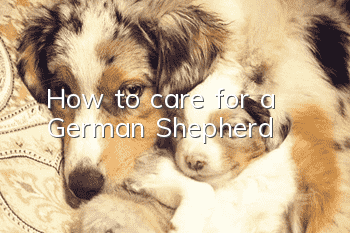
How to care for a German Shepherd? The German Shepherd should be well groomed, at least three times a week; the German Shepherd's toes should be clipped once a week. After one year old, depending on the length of the toenails, it may be clipped once every two weeks; it should be clipped once a month. Do not take more than two baths per day. If you take too many baths, your German Shepherd's fur will become very dry.
The German Shepherd Dog has a double layer of fur of medium length. The puppy's fur will become the adult dog's undercoat, and the outer layer of fur will grow out as the puppy grows. In the spring, when they replace their winter undercoat, German Shepherds have a major shedding episode. Female dogs that have not been ovariectomized may also lose hair when they are in heat and when they are weaning their puppies.
German Shepherds should be groomed well, at least three times a week. This is very important for several reasons: First, it’s a great opportunity to get close to your dog and check them for ticks, fleas, lumps, ear infections, pad damage, and the like. Things to pay attention to. You should have the following examination or care equipment:
Puppy hair brush, regular hair brush, brush with needle and bristles, comb for long hair, cutter or knife for knotting hair (please use with caution), high-quality nail clippers, styptic powder Or, high-quality dog bath liquid or shampoo, conditioner, etc. (do not use human products), dog toothbrush and toothpaste (also do not use human products).
From the beginning of the puppy, you can only use a soft brush and brush gently until its hair grows out. Otherwise, you will hurt the puppy's skin and make them very uncomfortable. This will also happen in the future. Can cause many problems. When you are grooming your German Shepherd, you need to give him lots of praise or praise, and you want him to feel that this is something he enjoys. Brush all parts of your puppy's body thoroughly, paying special attention to the hair behind the ears, the hair under the front legs, and the hair on the tail, as these areas are prone to tangles. Trim your German Shepherd's toes (the pink part that grows out) once a week. It can help your German Shepherd's claws grow compact and dense. If you let the toenails grow, the claws will separate. After the puppy is one year old, depending on the length of its toenails, it may be cut once every two weeks. Both puppies and older German Shepherds should not be bathed more than twice a month, even when they are very dirty. If bathed too much, their fur will become very dry.
For adult German Shepherds, first use the brush of the puppy to brush the hair behind the ears, the hair under the front legs and the hair inside. Those are very tender parts, so the brush of the puppy Softer and milder.
Next, use a regular bristle brush to brush over the entire length of the German Shepherd, starting at the head. This will help remove broken hairs (these broken hairs can cause tangles). It is best to use a plastic bag to collect these broken hairs. Make sure you brush the hind legs (these are particularly prone to tangles) and the tail (some German Shepherds have particularly puffy and frizzy tails), and then comb through them gently with the comb.
If you find a place that is not smooth, use one hand to grasp the hair in this area, and the other to hold the comb to smooth it out. It is best to grab less hair at a time and comb it several times. If there is a large area of knotting, you can use a cutter or knife to cut off the knotted hair. Use the pointed side to aim at the knotted part. Please be extremely careful when doing these things as you can easily injure your German Shepherd and yourself.
If the knot is very painful, it is best to take him to see a professional nurse. Finally, use a brush with pins and bristles to groom your German Shepherd. Use the bristled side to comb the face and body of the German Shepherd, and then use the soft side to comb the hair on the tail and butt. Next you should trim your German Shepherd's nails, brush its teeth and check its ears for any signs of inflammation or bad odor, which are signs that it's time to see your veterinarian.
Remember to comb your German Shepherd thoroughly before bathing it. Once the knot becomes wet, it will become tighter and tighter until it becomes impossible to get it open and the only choice is to cut it off. Coat knotting can be very painful for a German Shepherd, especially if it becomes very tight. Use a bathtub or shower to bathe your German Shepherd (I personally prefer to use a shower. German Shepherds don’t like to stand in dirty water and German Shepherds like a water massage).
Like people, German Shepherds don’t like to take cold water baths. In addition, German Shepherd dogs will be washed cleaner with warm water. Of course the water temperature should be about room temperature or only slightly warmer. If your German Shepherd is shivering during a wash, the water is too cold, and if it's panting it's too hot (remember, German Shepherds can heat up easily so watch these carefully).
To use special shampoo, you can first dilute it with water in the basin and then use a towel or sponge to bathe the German Shepherd. Remember to protect your German Shepherd’s ears when you flush them. And use a towel dipped in water to wash the German Shepherd's face (around the eyes, nose and mouth). I always soap my German Shepherd twice and rinse it with water twice (you will be surprised how much dirt is left in the second wash).
Next apply conditioner (if needed) and rinse thoroughly. Otherwise, there will be a layer of mucous membrane on the German Shepherd's fur, which will easily stick to dirt. You can dry your German Shepherd with a towel or blow dry with a low-temperature air dryer. Do not let your German Shepherd outside until it is completely dry (nothing collects dust more easily than wet fur).
When the German Shepherd is dry, it needs to be brushed again. Remember that it is best to let your German Shepherd clean its intestines and stomach outside before bathing it. Of course, bathing should also be completed before feeding the German Shepherd.
There are a lot of rewards to use when taking a bath. Remember that your German Shepherd's coat health comes from within (i.e. proper nutrition), this is to ensure that his coat is shiny and gorgeous from the inside out.
If he has malnutrition or health problems, don’t give your German Shepherd too many baths, as this will make his coat look shinier.
If the nutrition of the German Shepherd is appropriate, but the coat looks a little dark or dry, you should suspect that there are bugs or thyroid problems in the coat.Question, you need to take him to see a doctor.
Related articles

Random articles
- How to tell the difference between German Shepherds
- What is the personality of a Newfoundland dog?
- How to raise a German Shepherd
- How to choose a purebred Corgi puppy
- What to feed Corgi puppies
- How to raise a Newfoundland dog
- How to raise a newborn dog
- When does Pomeranian lose hair?
- Precautions for changing teeth of Corgi
- Things to note during the Corgi shedding period