
How to distinguish Rottweiler Terrier
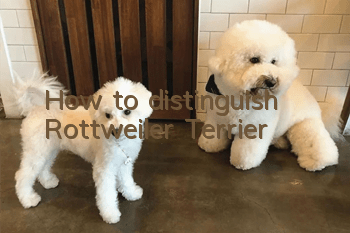
How to tell a Rottweiler Terrier? The Rottweiler Terrier should be no more than 10 inches tall at the withers, approximately equal to body length, with a level topline and a slightly shorter body that is compact and deep. The tail needs to be docked at half the total length, with the base of the tail at the same level as the topline and standing upward. The coat is hard, straight and close to the body, forming a protective mane on the neck and shoulders.
Body type
One of the smallest terriers, the ideal height at the withers should be no more than 10 inches. The height at the withers is approximately equal to the body length. Adequate bone mass. Weighs about 12 pounds. It should be in proper proportion to the overall structure of the dog. Being able to undertake their work is the primary consideration.
Neck, topline and body
Neck is of medium length, strong, and blends well into the shoulders. Topline level, body slightly short, compact and deep. Chest width is good. Ribs well sprung and loin short. The tail needs to be docked at half its total length. For the working needs of terrier dogs, the tail needs to be of sufficient length. The base of the tail is at the same level as the topline and erect upward.
Coat
Seta, the hair is hard and straight, close to the body, and has a certain undercoat. The coat on the neck and shoulders forms a protective mane. The hair on the head, ears, and muzzle is all short and smooth, except for some eyebrows and beards. The coat of this breed should appear as natural as possible. Very minor trimming is permitted, but cosmetic trimming is a serious defect.
Color
Various degrees of red, wheaten, black, brown or gray are acceptable, but white markings are not ideal.
Gait
The legs remain parallel to each other during movement, the forelimbs are fully extended, and the hind limbs have strong driving force. Proper hindquarter structure provides adequate hindquarter drive. The forelimbs move easily, with the distance between the paws and elbows consistent, and when the pace is accelerated, the paws are turned slightly inward. The hind feet should land exactly in the footprints of the front feet, with the stifles and hocks moderately bent. The topline remains level.
Temperament
Happy, brave, loyal and loving. Adaptable and active, they make great companions.
Related articles
Random articles
- What is the personality of Finnish Spitz?
- How to care for a German Shepherd
- How to Feed a German Shepherd
- How to choose Pomeranian
- What should German Shepherd puppies eat?
- How to tell the difference between German Shepherds
- What is the personality of a Newfoundland dog?
- How to raise a German Shepherd
- How to choose a purebred Corgi puppy
- What to feed Corgi puppies